Home › Products › Particle Analysis › Laser Particle Size Analysis
Analiz Cihazları / Particle Analysis

Laser Particle Size Analysis

ISO 13320-compliant laser diffraction for fast, repeatable particle size distribution measurement from 0.02–3,500 µm. Wet and dry dispersion modes available.
ISO 13320 Mie & Fraunhofer 0.02 - 3 500 µm Wet & Dry Dispersion DLOI Wide-Angle Optics
Lazer Partikül Boyut Analizi
DLOI Wide-Angle Optical System

DLOI: 0.016°–165° Wide-Angle Coverage

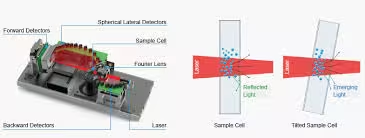
Most standard laser diffraction systems operate between 0° and 90°. Small particles scatter light at angles beyond this range, which introduces measurement error. The DLOI (Dual Lens Optical Instrument) system covers the full angular range from 0.016° to 165° in a single measurement — without lens changes.
📡
Wide Angular Range, Single Measurement
The photodetector array spanning 0.016° to 165° collects scatter signals from both fine and coarse particles simultaneously.
🔧
No Manual Lens Swapping
Switching between size ranges requires no lens removal or installation. This eliminates operator-induced error and reduces measurement time.
🎯
Nanometer-Level Sensitivity
The lower detection limit of 0.02 µm serves colloidal dispersions and fine API powders that require wide-angle optical coverage.
Laser Diffraction Scatter Pattern and Calculation Models

Fraunhofer or Mie? Sample-specific selection

Two mathematical models describe how light interacts with particles in laser diffraction. Selecting the correct model is critical for reliable results.

🌐
Fraunhofer Approximation
Assumes particles deflect light by diffraction only. Reliable for opaque particles above 1 µm. No refractive index input is required, making it fast and straightforward.
🔬
Mie Theory
Accounts for light transmission through the particle and the refractive index. Preferred for particles below 1 µm and for transparent materials where Fraunhofer assumptions break down.
📊
Instant Results, Full Distribution
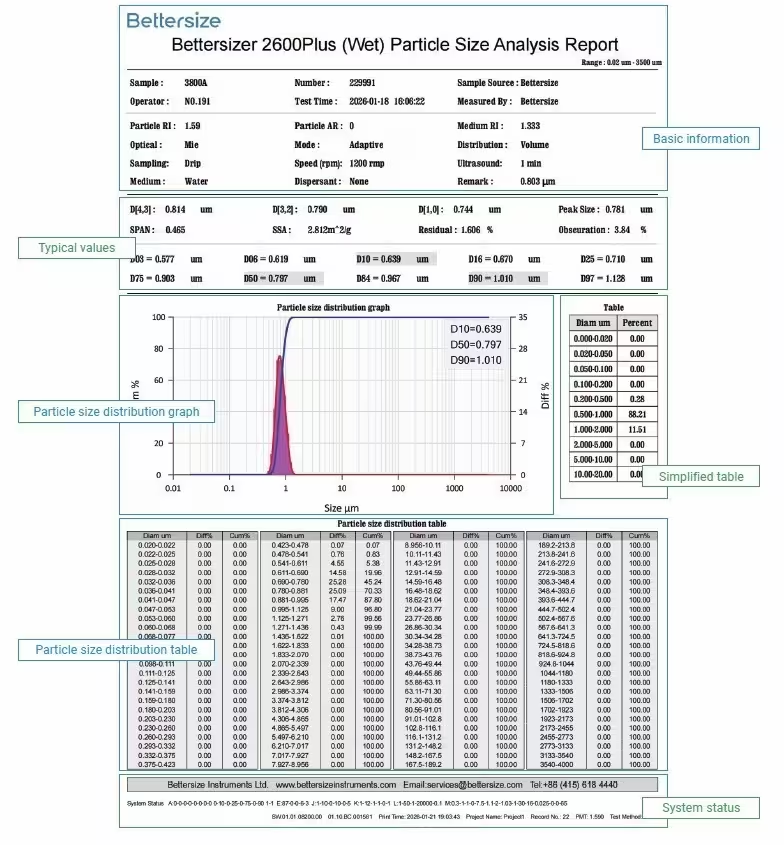
Each measurement reports D10, D50, D90 values along with frequency and cumulative distribution curves in real time.

Laser Particle Size Analysis Products

Select one of the products in this subgroup to view its detail page.
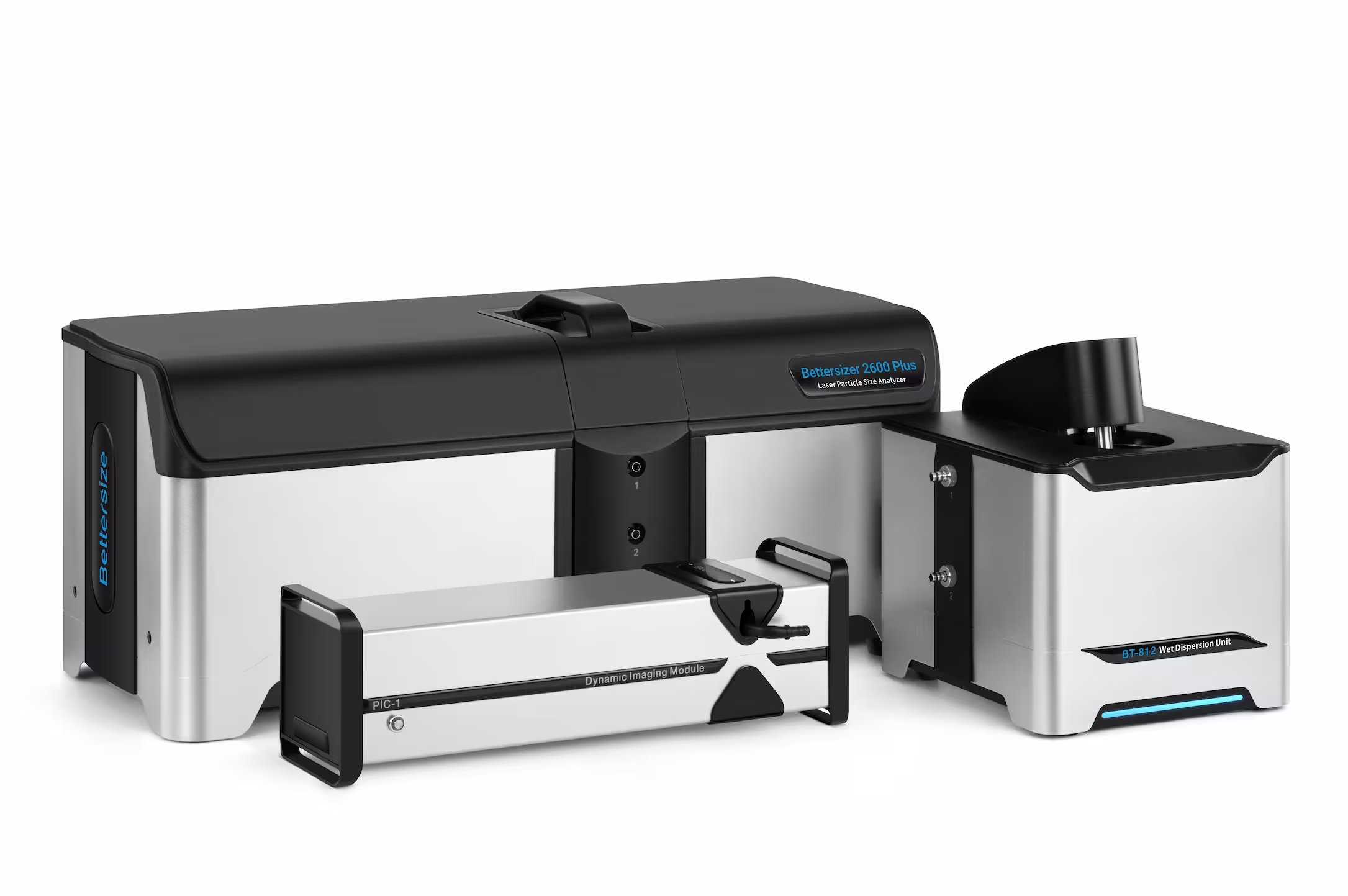
Bettersizer 2600 Plus
Bettersize
Bettersizer 2600 Plus

Combines laser diffraction with the PIC-1 dual-camera dynamic image analysis module in a single platform. Measures particle size and 24 shape parameters simultaneously from 0.02 to 3,500 µm. Wet and dry dispersion modules provide full flexibility for any sample type.
Laser Diffraction PIC-1 Dynamic Imaging ISO 13320 0.02–3,500 µm 21 CFR Part 11
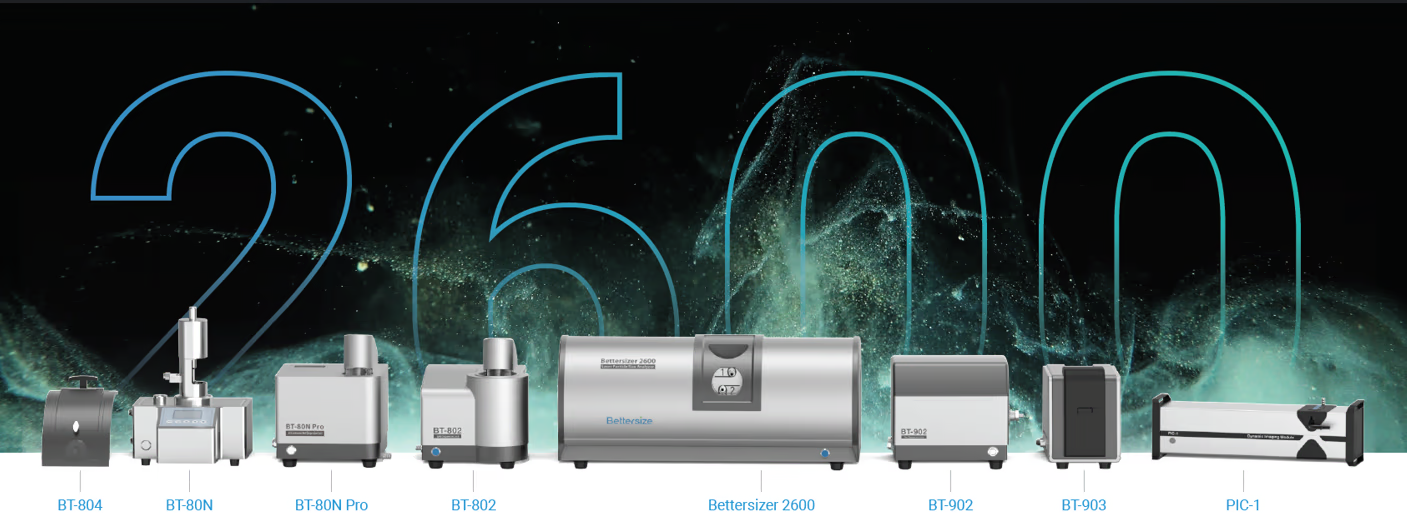
Bettersizer 2600E
Bettersize
Bettersizer 2600E

The 2600E combines laser diffraction and PIC-1 dynamic imaging in a single modular platform. It covers 0.1–1,600 µm via laser diffraction, extended to 3,500 µm with PIC-1. Wet and dry dispersion options accommodate a broad sample range.
Laser Diffraction PIC-1 Dynamic Imaging Wet & Dry Dispersion ISO 13320 & 13322-2 92 Detectors
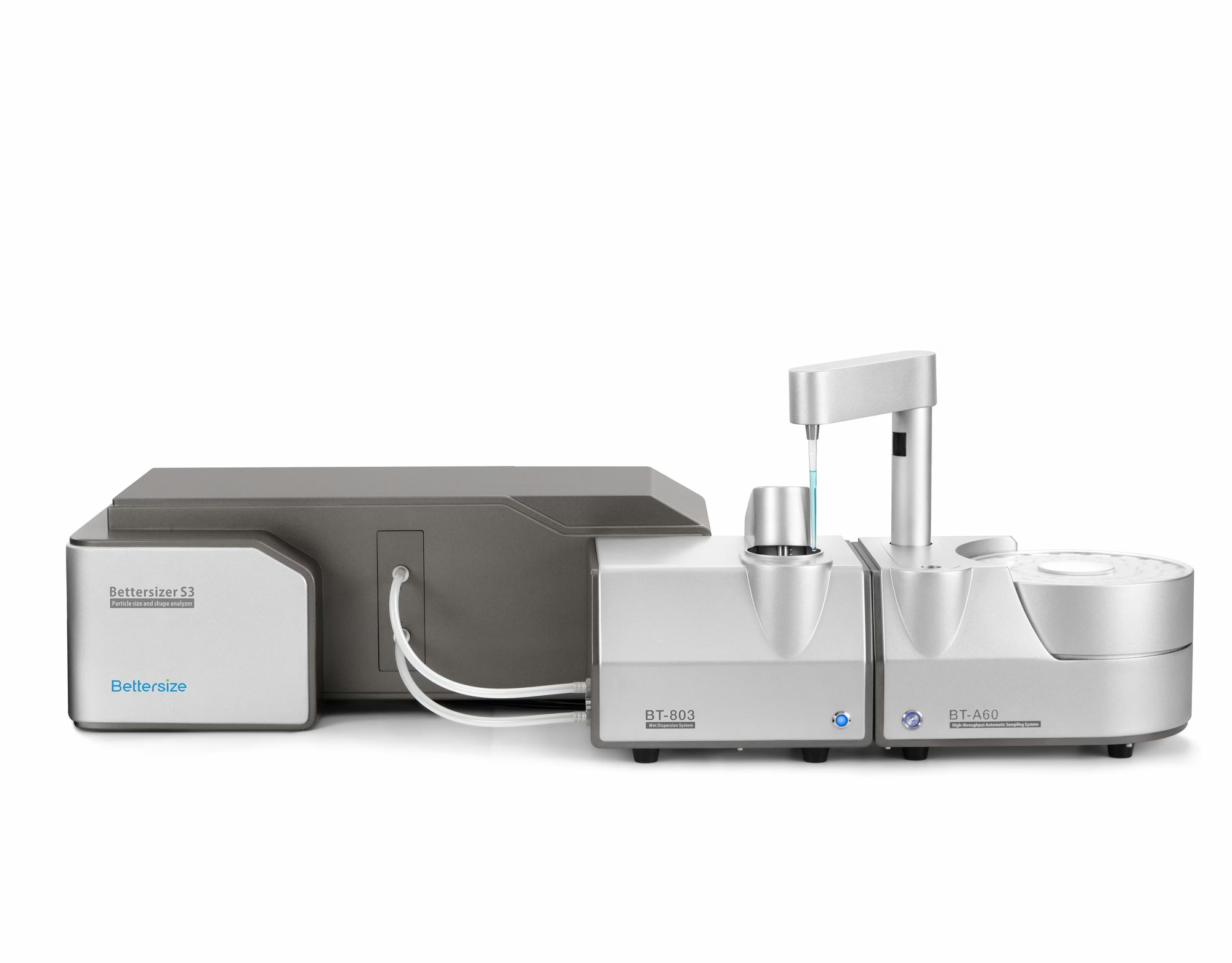
Bettersizer S3 Plus
Bettersize
Bettersizer S3 Plus

Combines laser diffraction and dual CCD dynamic image analysis in a single platform. Measures particle size and shape parameters simultaneously across 0.01–3,500 µm. Automatic refractive index detection improves measurement accuracy for unknown samples.
Laser Diffraction Dynamic Image Analysis Patented DLOI Optics ISO 13320 0.01–3,500 µm
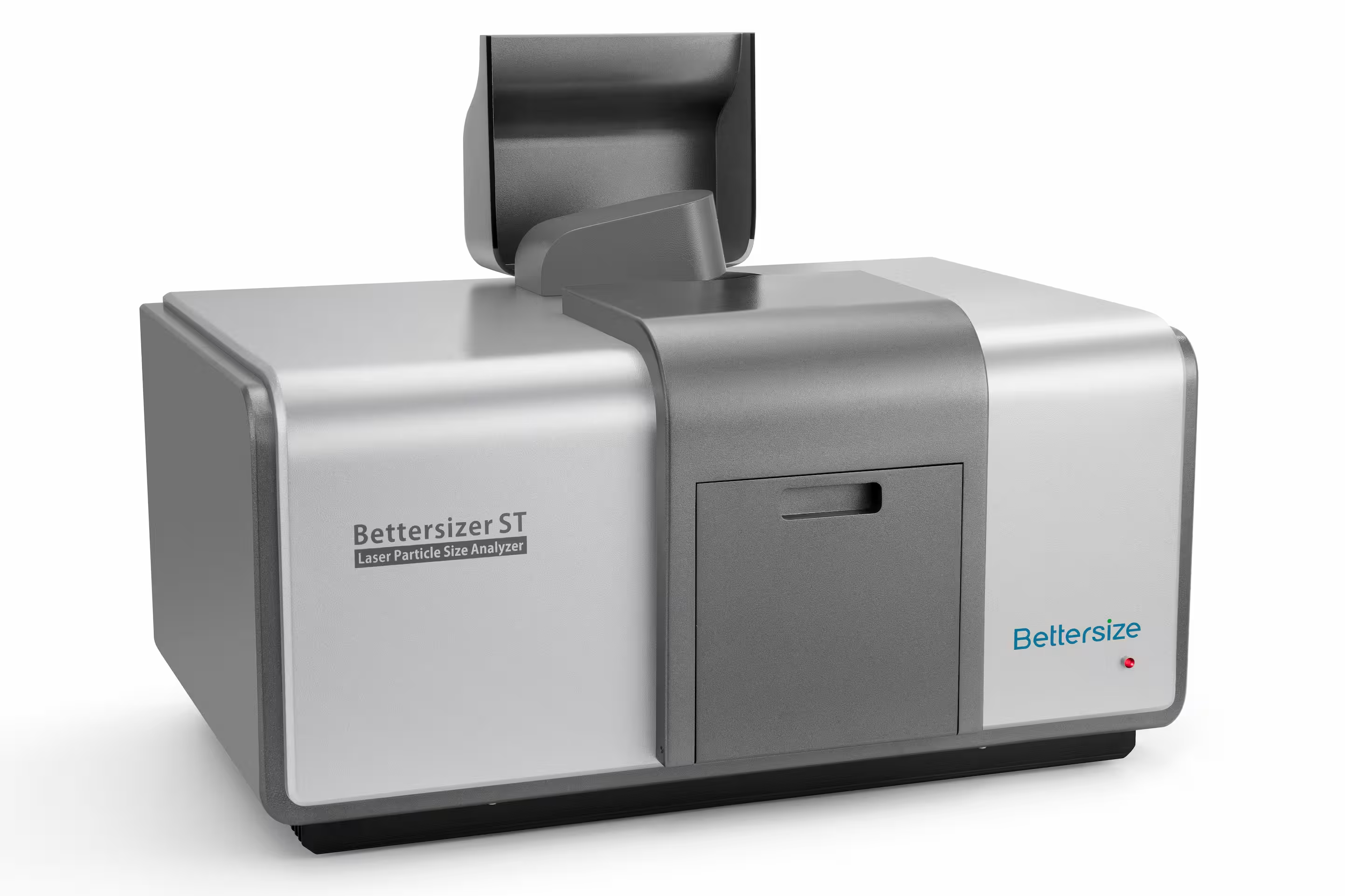
Bettersizer ST
Bettersize
Bettersizer ST

Designed for industrial quality control, the Bettersizer ST measures particle size from 0.1 to 1,000 µm with high repeatability. The patented DLOS optical system and built-in automatic wet dispersion unit deliver consistent results with minimal operator input. SOP-driven operation eliminates procedural errors and saves bench space.
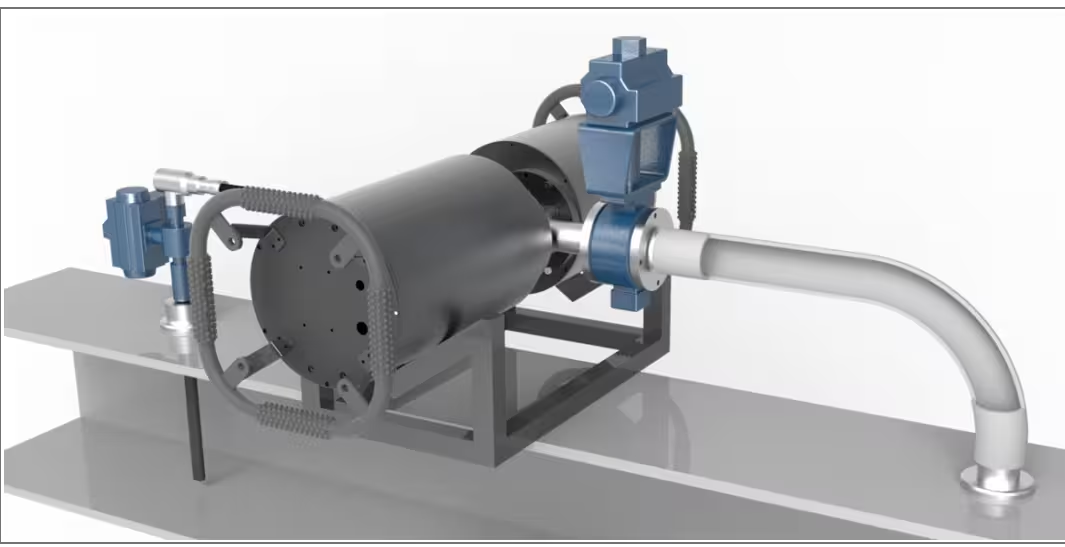
Laser Diffraction Patented DLOS Optics Fully Automatic SOP-Driven ISO 13320
BT-Online1 Online Particle Size Analyzer
Bettersize
BT-Online1

The BT-Online1 integrates directly into dry powder production lines and operates 24/7 as a real-time particle size analyzer. It monitors 4 process lines simultaneously with one device, and requires no maintenance in industrial environments thanks to its dual air curtain and sheath gas lens protection.
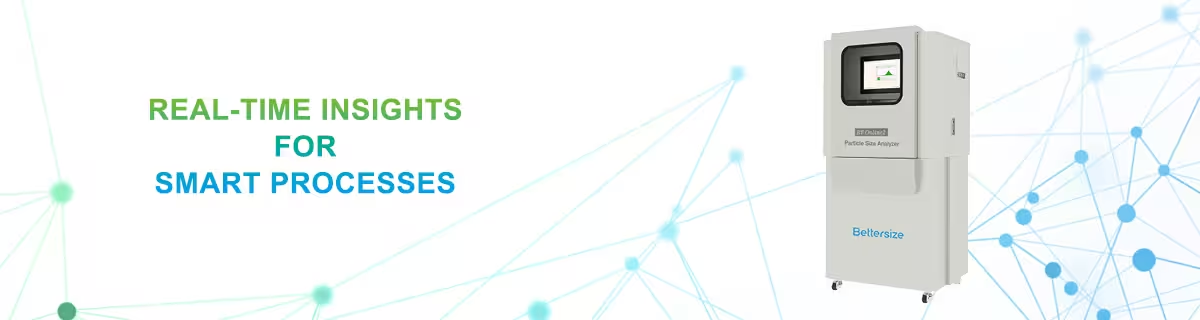
Dry Powder In-line 0.1 – 1000 µm 4 Lines Simultaneous IP65 DCS/PLC Integration
BT-Online2 Online Particle Size Analyzer
Bettersize
BT-Online2

The BT-Online2 is an in-line particle size analyzer designed for direct integration into production lines. Its patented Fourier + Reverse Fourier optical system and 92 detectors deliver continuous real-time PSD measurement across 0.02–2000 µm. Precise results even in high-solids slurries.

Wet Dispersion In-line 0.02 – 2000 µm 92 Detectors Fourier Optics External Dilution

Which Industries Use It?

🔬
R&D Laboratories
Explanation for the R&D laboratories subgroup for trial purposes
⛏
Materials and Metallurgy
🏭
Metal Production and Processing
⛏️
Mining and Minerals
Size optimization for grinding process control and flotation efficiency, and mineral identification.
🎨
Paints and Coatings
🏗️
Construction Materials & Cement
Tensile testing of steel reinforcement, concrete compressive strength, and quality control of welded joints.
💊
Biomedical and Pharmaceutical Industry
Implant material testing, connector strength, and analysis of biopolymers and suture threads.
💎
Precious Metal Refineries

What You Wonder About

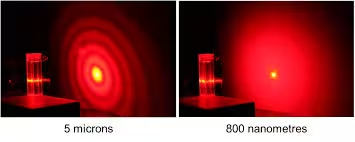
A laser beam interacts with particles in the sample and scatters. Small particles scatter light at wide angles; large particles scatter at narrow angles. Detectors measure this angular intensity distribution. The software then converts the scatter pattern into a particle size distribution using either Mie theory or the Fraunhofer approximation. A typical measurement completes in under 60 seconds.

Modern laser diffraction instruments measure from 0.02 µm to 3,500 µm. The lower limit depends on the optical system — the DLOI wide-angle optic reaches 0.02 µm. The upper limit is determined by the dispersion unit capacity. A single instrument covers both nano-scale particles and coarse powders.

The Fraunhofer approximation is sufficient for opaque particles above 1 µm and requires no refractive index input. Mie theory is preferred for particles below 1 µm or for transparent materials; it requires the material's real and imaginary refractive indices for accurate calculation. Most modern software supports both models.

Wet dispersion is suited for powders sensitive to solvation, pharmaceutical APIs, and fine particles — the liquid medium separates agglomerates and reveals true primary particle size. Dry dispersion is preferred for solvent-sensitive materials, high-throughput routine analysis, and samples that are stable in air. Some instruments support both modes on the same platform.

ISO 13320 is the international method standard for particle size analysis by laser diffraction. Compliance means the instrument meets defined criteria for measurement principle, validation procedures, and reporting requirements. This standard is widely referenced in pharmaceutical, food, and chemical industry specifications.

Key decision points: if particle shape also needs to be measured, the Bettersizer 2600 Plus or S3 Plus includes the PIC-1 imaging module. If size distribution alone is sufficient, the 2600E or ST is more cost-effective. If the 0.1–1,000 µm range covers your needs, the ST is adequate; for wider ranges, the 2600 series is the better fit. Contact us for a demo with your own sample material.

Need a Quote?

Contact us for detailed information and pricing options for our instruments. We are here to help with 25 years of experience.