In XRF analysis, measurement accuracy depends heavily on sample homogeneity and surface quality. Raw material is first size-reduced and milled, then either compressed into a pellet or fused into a glass disc. A properly prepared sample lets your XRF spectrometer perform at its full capacity.
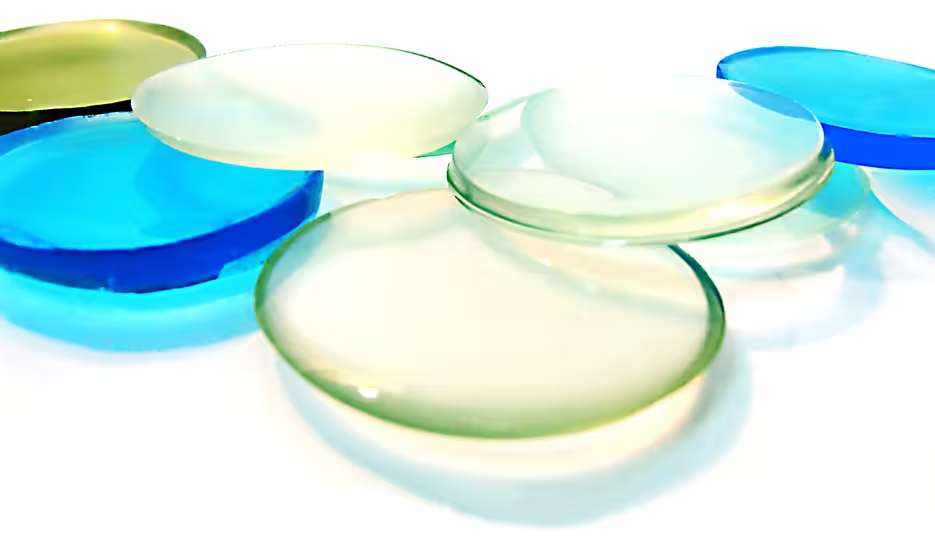
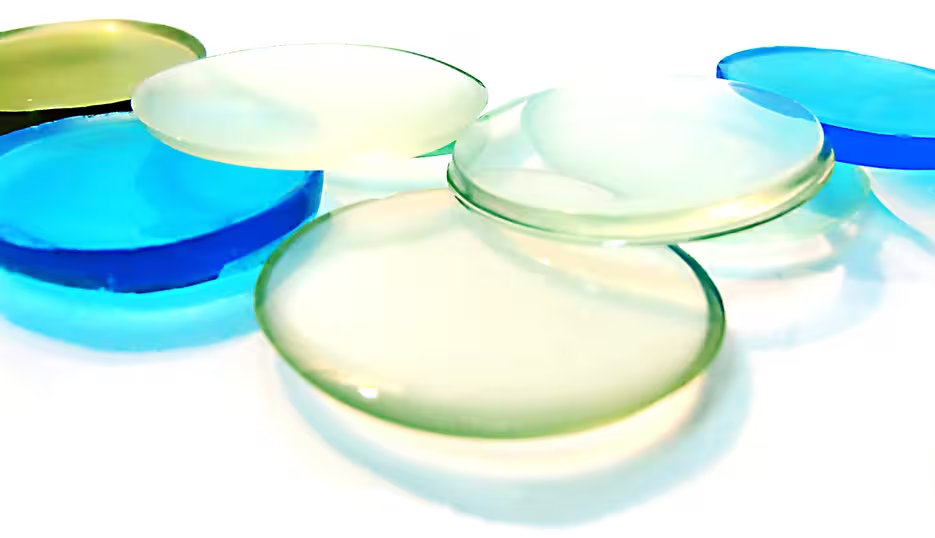
PREPARATION WORKFLOW
The XRF sample preparation workflow varies by sample type and required analytical precision. Crushing and milling ensure homogeneity; the final step is a choice between pelletizing or fusion.
PRODUCTS
Select one of the products in this subgroup to view its detail page.
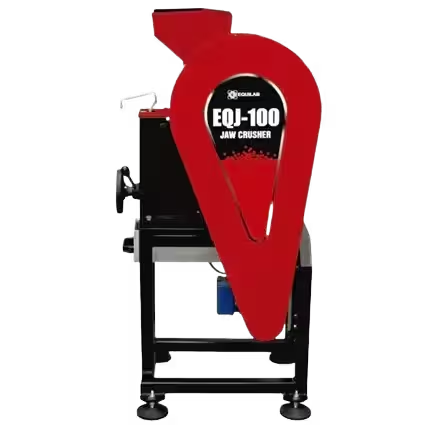
The EQJ-100 and EQJ-200 are jaw crushers designed to prepare hard and brittle samples for secondary grinding. Two models: a compact bench-top unit and a high-capacity industrial crusher.
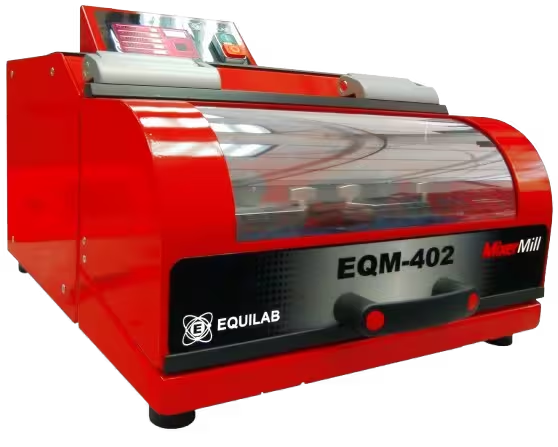
The EQM-402 uses horizontal oscillation (up to 32 cycles per second) to drive grinding balls against the sample, achieving sub-10 µm in 1–4 minutes. Two bowls run simultaneously; it reduces fusion time and is the ideal compact benchtop unit for XRF pellet and fusion bead preparation.
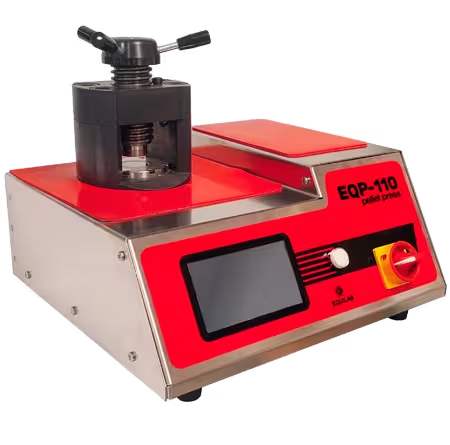
The EQP-110 produces 40 mm pressed pellets for XRF analysis — crack-free and stable. Its double-cycle pressing system removes trapped gases, improving surface flatness. The instrument design physically prevents access to the pressing zone during operation, eliminating the need for a safety door.
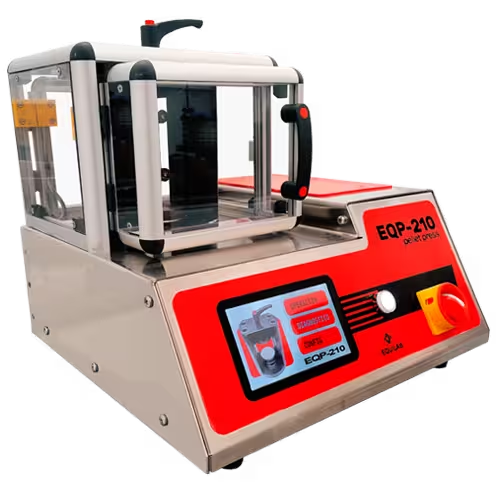
The EQP-210 produces stable, crack-free pellets for XRF and FTIR KBr analysis across a wide die range from 8 mm to 40 mm. The aluminium and polycarbonate safety cabinet with a coded open-door detector ensures full operator safety. Double-cycle pressing purges entrapped gases from each pellet.
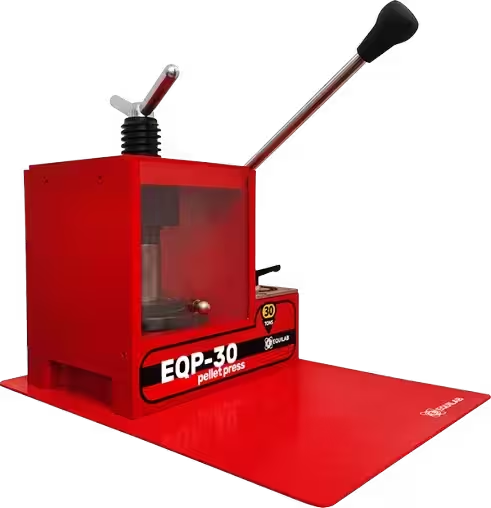
The EQP-30 produces stable pellets for XRF and FTIR KBr analysis at up to 30 tonnes of hydraulic pressure — with no electrical connection required. Its compact benchtop design and two polycarbonate safety guards make it suitable for space-constrained laboratories. An analogue pressure gauge keeps pressure directly visible to the operator.
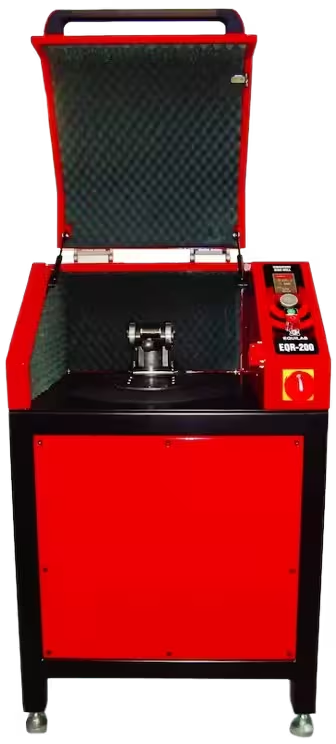
The EQR-200 uses pressure and friction between a ring and puck set to reduce samples to sub-45 µm in under 60 seconds. Its sound-absorbing acoustic enclosure keeps laboratory noise levels low, while the automatic lid interlock prevents access until the motor has fully stopped.
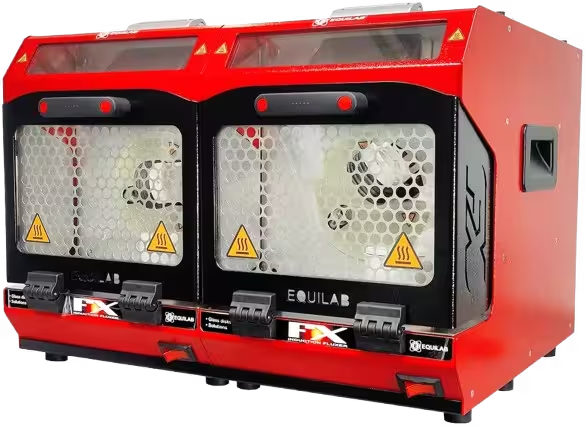
The Equilab FX Series generates heat directly inside the Pt/Au crucible via electromagnetic induction. With ±1°C optical pyrometer control and 3–11 minute fusion times, it produces homogeneous glass discs for XRF and fully dissolved solutions for ICP/AAS — no external gas, fume hood, or special infrastructure required.
Contact us for detailed information and pricing options for our instruments. We are here to help with 25 years of experience.